Free Entry To Ancient Sites & Museums In Greece

There are six occasions each year when the state-run archaeological sites and museums in Greece let everyone in for nothing, plus a short list of places that never charge at all. Here's how free entry to ancient sites and museums in Greece actually works, and where the small print catches people out.
Key takeaways
- Free days at state sites: 6 March, 18 April, 18 May, the last weekend of September, 28 October, and the first and third Sunday of each month from 1 November to 31 March.
- Most websites only mention the first Sunday in winter. The third Sunday counts too.
- Free days are not the same as closure days. Sites shut completely on 1 January, 25 March, 1 May, Easter Sunday, 25 and 26 December.
- 22 sites and museums are free all year round, including Thermopylae, the Acropolis of Rhodes and the Archaeological Museum of Naxos.
- Free days only apply to Ministry of Culture sites. The Acropolis Museum, Benaki and other private or municipal museums set their own rules.
On this page
- The six free entry days in Greece
- The first and third Sunday rule in winter
- Days when Greek sites are closed completely
- Greek sites and museums that are always free
- Sites where the free day pattern is different
- What a free day actually saves you
- The small print of a free entry day
- Is it worth planning around free days?
- Free entry in Greece FAQ
The six free entry days in Greece
The Greek Ministry of Culture runs the great majority of the country's archaeological sites and museums. Those sites share one national list of free admission dates, and it applies from Rhodes to Epirus.
Of the 304 ticketed attractions I checked, 297 carry exactly this note:
- 6 March, in memory of Melina Mercouri
- 18 April, International Monuments Day
- 18 May, International Museums Day
- The last weekend of September, for European Heritage Days. Note that this is a full weekend rather than a single day.
- 28 October, Ochi Day
- The first and third Sunday of every month from 1 November to 31 March
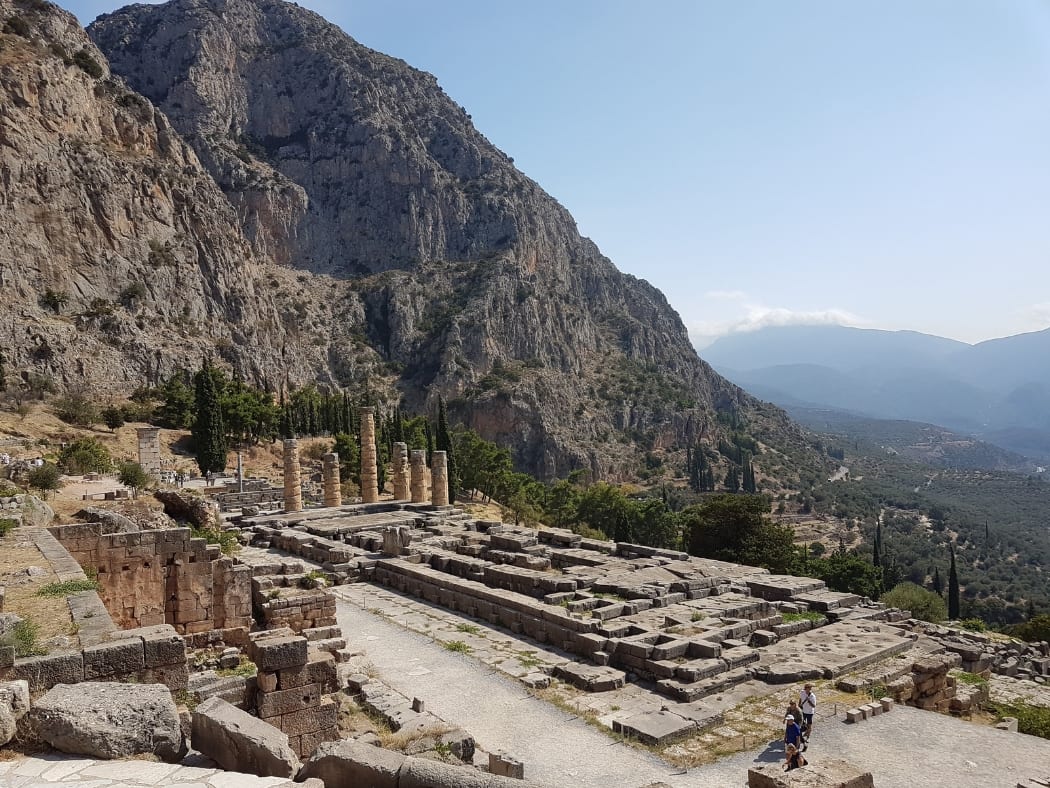
That covers the big hitters. Delphi, Knossos, Olympia, Mycenae, Epidaurus and the Acropolis are all on the standard list, along with the small island collections nobody has heard of.
The first and third Sunday rule in winter
This is the part worth reading twice. Plenty of travel sites, and plenty of older pages (mine included, until I sat down and checked all 326 listings), state that entry is free on the first Sunday of the month from November to March.
The current wording on the official listings is the first and third Sunday of each month between 1 November and 31 March. That is ten free Sundays across the winter, not five.
If you are in Greece off season and someone tells you that you have missed the free Sunday, count forwards two weeks. There is a decent chance you have not.
It also means a winter city break can be timed cheaply. Two free Sundays a month gives you a much better shot at lining up a 48 hour trip to Athens with a no-charge day at the ancient sites.
Days when Greek sites are closed completely
Free days and closure days get muddled up constantly, so let's separate them. On these dates the state sites and museums are not free, they are shut:
- 1 January
- 25 March
- 1 May
- Easter Sunday (Greek Orthodox Easter, which often falls on a different date to Easter at home)
- 25 December
- 26 December
These are public holidays, and visitors regularly assume a public holiday means free entry. It does not. The gates are locked.
Individual sites also run shortened hours on other public holidays, so if your trip lands on one, check that specific site's own page before you set off.
Greek sites and museums that are always free
Twenty-two state attractions never charge admission at all. Most are small, several are gorgeous, and a few are genuinely famous. Grouped by region:
Aegean Islands
- Acropolis of Rhodes
- The Archaeological Museum of Naxos (the Cycladic figurine collection inside the Kastro of Naxos Town; mornings only, closed Tuesdays. This is a separate place from the Portara, which is free to walk up to anyway)
- Episkopi, Sikinos
- Volissos Castle
- Kritinia Castle
- Panteli Castle, Leros
Macedonia & Thrace
- Leivithra
- Nea Flogita Metochi Complex
- Servia
- Stageira
Peloponnese
- Acropolis of Ancient Sparta
- The House of Mosaics, Sparta
- Heraion of Perachora
Central Greece
- Thermopylae
- Archaeological Collection of Oreoi
- Karababa Fortress
Attica
- Loverdos Museum
- Souriza, Lavreotiki
Crete
- Zominthos
- Kydonia
Epirus
- Dymokastro
- Castle of Parga
Thermopylae and the Acropolis of Rhodes are the two most travellers are likely to reach without going out of their way, and neither costs anything at any point in the year.
Zominthos and Kydonia are useful to know about if you are on Crete and have already paid for the Palace of Knossos and the Heraklion museum in the same week.
Sites where the free day pattern is different
A handful of places do not follow the standard note, and two of them are in Thessaloniki:
- The White Tower and the Museum of Byzantine Culture in Thessaloniki list free admission on 6 March, 18 April, 18 May, the last weekend of September and 28 October. The winter Sundays are not mentioned in their note.
- Nestor's Palace in the Peloponnese lists the closure dates and a last admission time, but no free admission dates at all.
- The Archaeological Collection of Apeiranthos on Naxos and the Peristera shipwreck at Alonnisos carry no free admission note whatsoever.
- The Archaeological Collection of Seriphos and Archondiki on Psara publish their note only in Greek, but the dates are identical to the national list.
None of this is set in stone, and the Ministry does update the notes. If a free day is the whole reason for your journey, and especially for the Thessaloniki pair, ring ahead or check the site's own page in the week before you travel.
What a free day actually saves you
How much a free day is worth depends entirely on where you point yourself.
The cheapest tier of Greek state sites is €5, and around 165 attractions sit at that price. Another 84 or so are €10. At that level a free day saves you the cost of a coffee and a sandwich.
The picture changes at the top end. A €20 ticket covers Sounion, Epidaurus, Mycenae, Delphi, Knossos, Ancient Olympia, Palamidi and Spinalonga. The Heraklion Archaeological Museum is also €20. The Acropolis is €30, flat, all year round.
So a couple doing the Acropolis and one €20 site on a free weekend keeps €100 in their pocket. If you are working through the UNESCO sites in Greece over a longer trip, the numbers add up quickly.
The small print of a free entry day
Five things I'd want to know before turning up expecting a free ticket.
It only covers state-run places. The free days are a Ministry of Culture and ODAP arrangement. Private and municipal museums set their own policies and are not part of it. That rules out the Acropolis Museum, the Benaki, the Museum of Cycladic Art and the war museums.
Entry is at the gate. On a free day you are not buying an online ticket, because there is nothing to buy. You turn up and are admitted at the entrance.
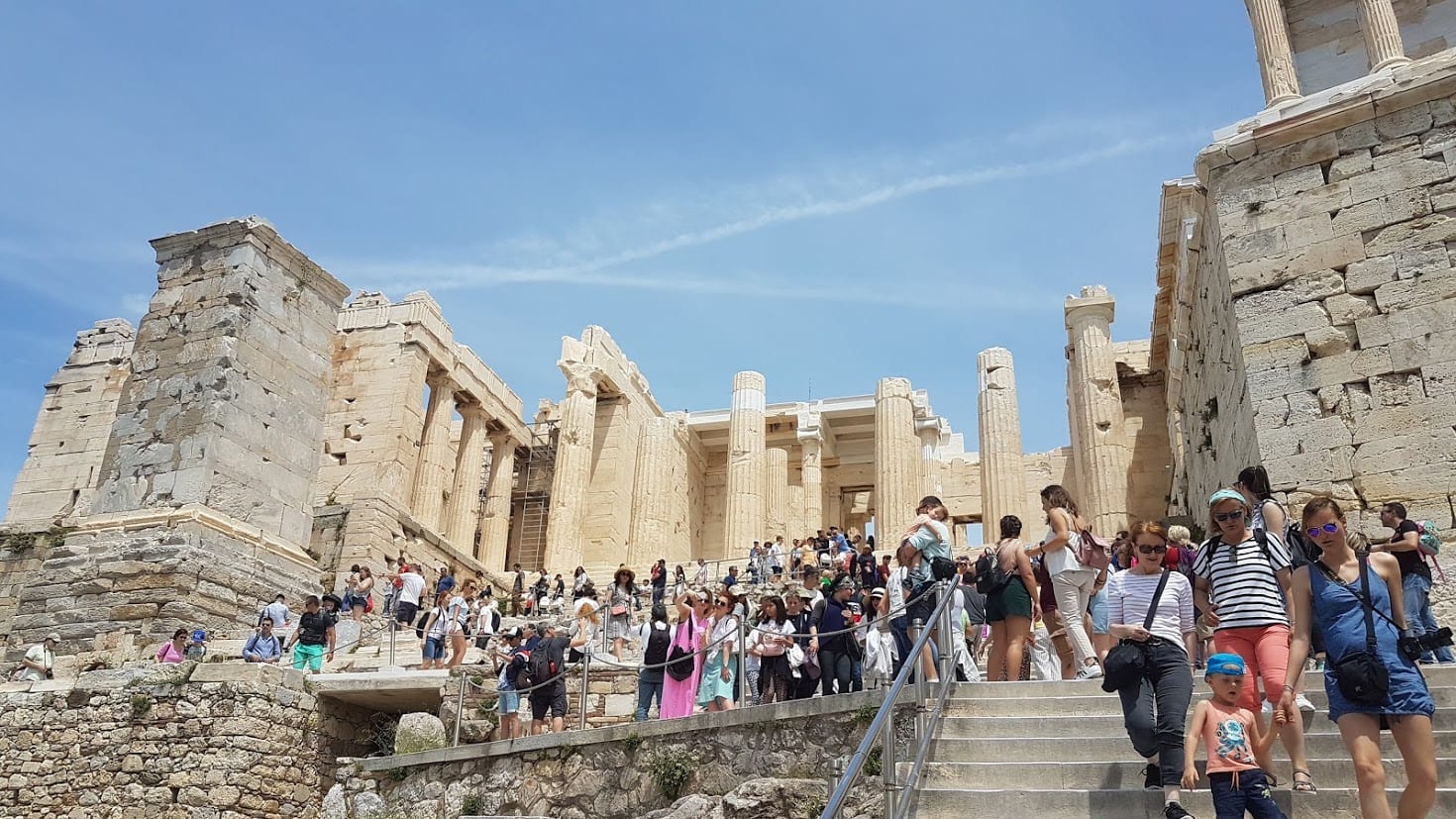
The Acropolis still runs timed slots. Free does not mean the flow control goes away. The timed entry system stays in place, and free days are extremely busy because Greek families use them too. If you want structure on a chaotic morning, a guided tour of the Acropolis is worth considering, though of course that has its own cost.
Reduced tickets are a separate thing. Concessions for students, EU citizens aged 65 and over, and EU citizens under 25 run all year at most sites. Those reduced tickets are sold at the gate only and never online, so bring the relevant ID rather than trying to buy in advance.
There is no Athens combined ticket any more. The old multi-site package for Athens was discontinued in April 2025. Every site is ticketed individually now, which makes the free winter Sundays more useful than they used to be for anyone doing Athens in a day.
Is it worth planning around free days?
My view, after ten years of living here: sometimes, and not always for the reason you think.
Run the sums first. Four adult tickets to the Acropolis is €120, and on a free Sunday in January that is €120 you keep. For a family that is a proper saving, and I would not pretend otherwise.
What you pay instead is queueing and elbow room. Free days draw in half of Athens, because locals plan around them as well. The site is busier, the ticket desk is slower, and the good photo spots have people standing in them. A €30 ticket on a quiet Tuesday in February buys you a calmer morning than a free one on the third Sunday.
Where free days genuinely shine is the mid-priced stuff you would otherwise skip. Small island collections, provincial museums, the €5 and €10 sites you walk past because you have already spent your budget. Those places are rarely crowded even on a free day, and a free ticket is exactly the nudge needed to go in.
My practical advice would be this. Do not rearrange a whole holiday around 18 May. But if you are already going to be in Greece in winter, look up which Sundays fall first and third in that month, and put your biggest, most expensive site on one of them. Go at opening time. Then spend the money you saved on lunch.
Free entry in Greece FAQ
Questions that come up again and again from readers planning around the free days:
Is the Acropolis free on Sundays?
Only in winter, and only on two Sundays a month. The Acropolis follows the national free admission list, which covers the first and third Sunday of each month from 1 November to 31 March. On every other Sunday of the year the standard €30 ticket applies.
What days are archaeological sites closed in Greece?
State-run sites and museums close completely on 1 January, 25 March, 1 May, Greek Orthodox Easter Sunday, 25 December and 26 December. These are closure days rather than free days, so do not confuse the two lists. Individual sites may also run shortened hours on other public holidays.
Is the Acropolis Museum included in the free entry days?
No. The free admission dates apply to sites and museums run by the Ministry of Culture. The Acropolis Museum, the Benaki Museum, the Museum of Cycladic Art and the war museums are private or municipal, and each sets its own admission policy. Check their own websites rather than assuming the national free days apply.
Are Greek museums free for students?
Not free, but reduced. Most state sites offer reduced admission to students, to EU citizens aged 65 and over, and to EU citizens under 25, and these concessions run all year rather than only on free days. Reduced tickets are sold at the gate only and cannot be bought online, so carry the ID that proves your category.
Do I need to book a ticket in advance on a free entry day?
There is no ticket to buy, so entry is handled at the gate. The Acropolis is the one to plan for, as it continues to operate its timed entry slots on free days and gets extremely busy with Greek visitors as well as tourists. Arriving at opening time is the simplest way to avoid the worst of it.
Which archaeological sites in Greece are free all year?
Twenty-two state attractions never charge admission. They include Thermopylae and the Karababa Fortress in central Greece, the Acropolis of Rhodes and the Archaeological Museum of Naxos in the islands, the Acropolis of Ancient Sparta and the Heraion of Perachora in the Peloponnese, Zominthos and Kydonia on Crete, the Castle of Parga in Epirus, and Stageira in northern Greece.
More Greek ancient sites to plan around
If you are building a trip around the archaeology, these guides go into detail on the individual sites:
UNESCO sites in Greece - the complete list, and which ones are realistic to combine.
Ancient Delphi - the Temple of Apollo, the museum and the Sanctuary of Athena Pronaia.
Mycenae - one of the most important archaeological sites in the country, and a €20 ticket on any non-free day.