Marathon Battlefield Day Trip From Athens
The Battle of Marathon is one of the most important moments in Western history -- and the battlefield is barely 45 minutes from central Athens. Here's everything you need to know to visit it.
Key takeaways
- Marathon Battlefield is 42 km northeast of Athens (45 min drive); burial mound marks 192 Athenians.
- Museum and tumulus site tickets €5 each (€3 reduced), 08:30-15:30, closed Tuesdays.
- Combine with Schinias Beach 3 km away – best beaches near Athens with sun loungers.
- Manage expectations – no dramatic ruins; power is in history and landscape; read beforehand.
On this page
I've been living in Athens since 2015, and Marathon is one of those places I keep going back to. Not because it's flashy -- it really isn't -- but because standing on that plain knowing what happened there in 490 BC genuinely gives you chills.
It's also easy to combine with a side-trip to Schinias Beach, which makes for a solid full day out of the city. Always nice to combine a little culture with a beach day if you can!
The Battle (Very Quick Version)
In 490 BC, the Persian King Darius sent a fleet to punish Athens. The Persians landed at Marathon -- wide bay, flat ground, good for cavalry. Athens sent about 10,000 hoplites, joined by 1,000 Plataeans. They were outnumbered roughly two to one.
The Athenian general Miltiades timed the charge perfectly. The Greeks ran at the Persians, crushed the flanks, and folded in on the centre. The Persians broke and fled to their ships. According to Herodotus, 6,400 Persians died against 192 Athenians.
Without this victory, the later stands at Thermopylae and Salamis probably wouldn't have happened. Athenian democracy, philosophy, the lot -- it all hinged on this one battle on a plain northeast of Athens.
How to Get There
By Car (Best Option)
Take Mesogeion Avenue northeast from Athens towards Rafina, then follow signs to Marathon. Straightforward drive, about 45 minutes to an hour depending on traffic. Free parking at both the tumulus and the museum.
I'd strongly recommend driving if you can. The sites are spread out across the plain and getting between them by bus is a pain. If you are planning to rent a car in Athens and then are heading out to see more of Greece, this might be a good first stop.
Essential Info: Marathon Site & Museum
- Tickets: €5 full, €3 reduced
- Opening hours: Apr 1–Oct 31: 08:30–15:30, closed Tue; Nov 1–Mar 31: 08:30–15:30, closed Tue. Last admission: 20 minutes before closing time
- Closed: 1 Jan, 25 Mar, 1 May, Easter Sunday, 25–26 Dec
- Free entry: 6 Mar, 18 Apr, 18 May, last weekend of Sep, 28 Oct, and 1st & 3rd Sundays Nov–Mar
- Book online: official tickets at tickets.hh.gr (tickets are also sold at the gate)
Facts checked against the official Hellenic Heritage (hh.gr) data, August 2026.
By Bus
KTEL buses run from the Mavromateon terminal (near Victoria metro station) to Marathon. Several services per day, journey time about 1.5 hours. Ask the driver for the museum stop.
The problem is that once you're there, the tumulus, museum, and Schinias Beach are all a few km apart with no convenient bus connections between them. Doable, but annoying. You probably won't enjoy walking long distances between places in the blazing sun of summer.
By Guided Tour
Some operators include Marathon in day tours from Athens, usually combined with Cape Sounion or the Athens Riviera. It's less commonly offered as a standalone, but private tours are available. Take a look here for more day trips from Athens.
What to See and Do
The Tumulus (Burial Mound)
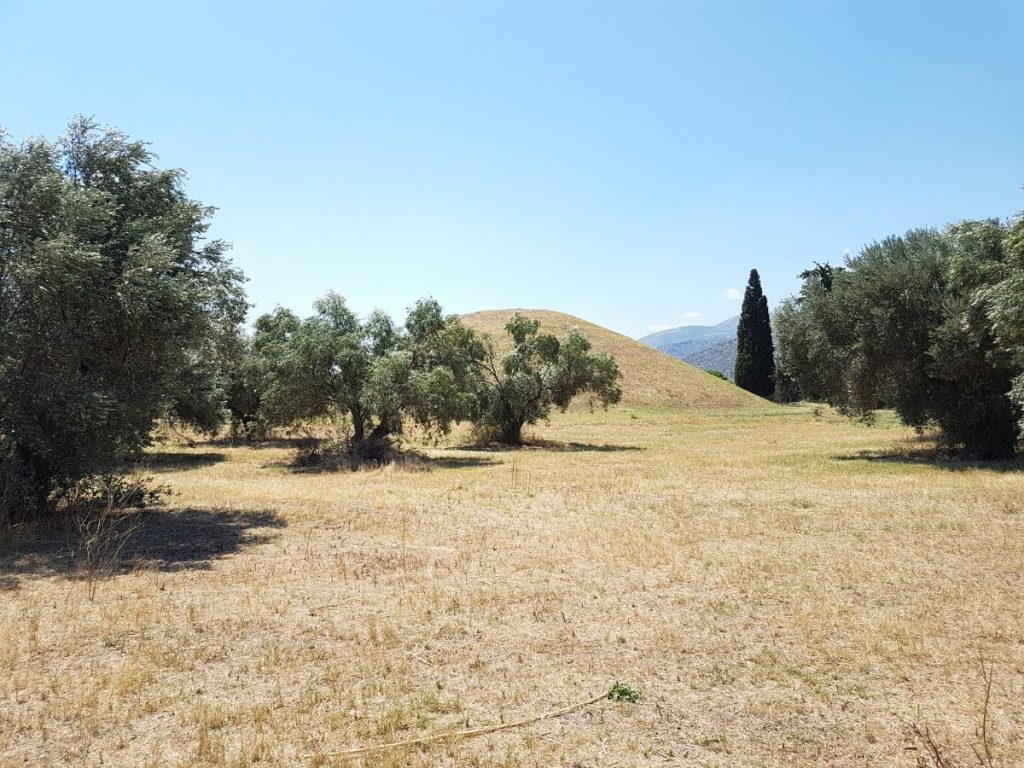
This is the main event. A 9-metre-high earth mound marking the communal grave of the 192 Athenians who fell in the battle. It was excavated in the 19th century and they found cremated remains and artefacts inside, confirming the ancient accounts.
The setting is what makes it. The mound stands alone in the plain, surrounded by grass and farmland. No gift shops, no audio guides, no tour groups jostling for selfies. Just the mound and the landscape. It's genuinely moving.
Free to visit, open at all times.
Marathon Archaeological Museum
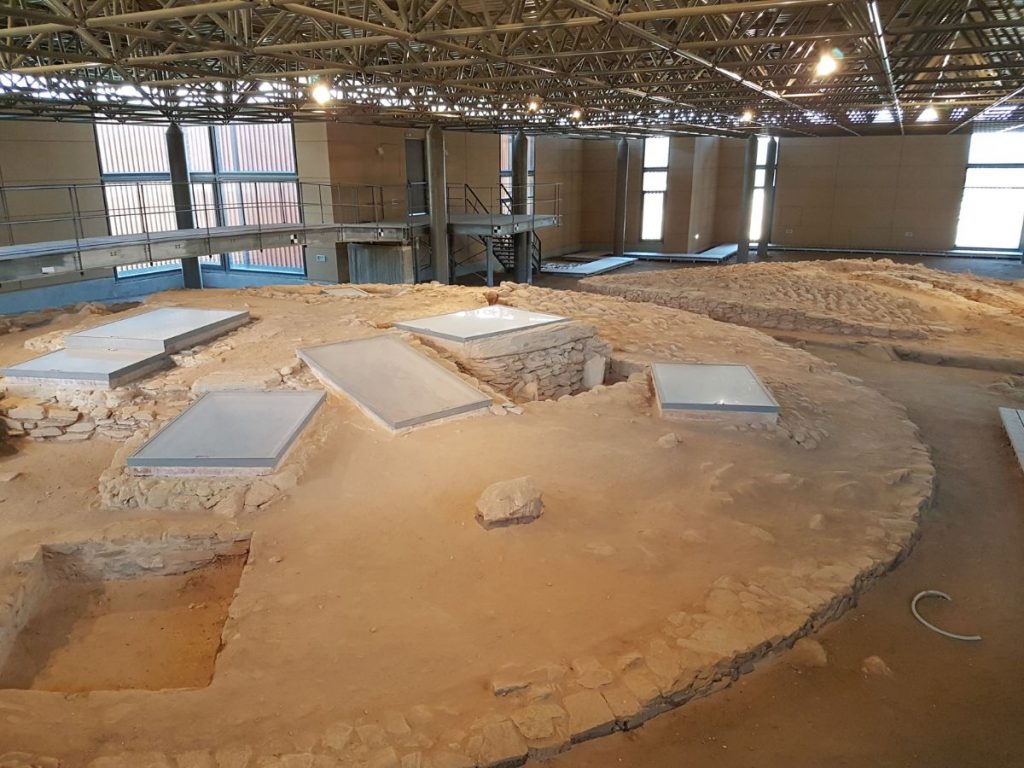
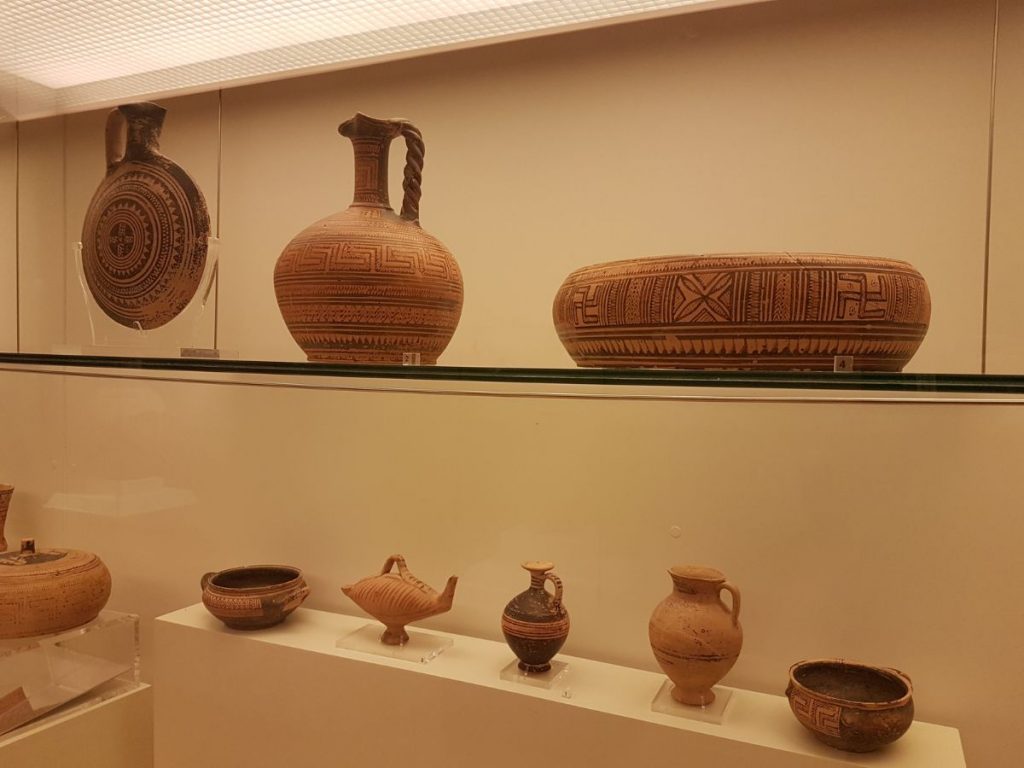
A small museum on the main road in Marathon town, about 2 km from the tumulus. It has pottery, weapons, and a model of the battlefield. Well-curated but small -- 30 to 45 minutes is plenty.
Entrance fee: 5 EUR (3 EUR reduced). The museum and the tumulus archaeological site are ticketed separately.
Hours: 08:30-15:30 (may extend in summer). Closed Tuesdays.
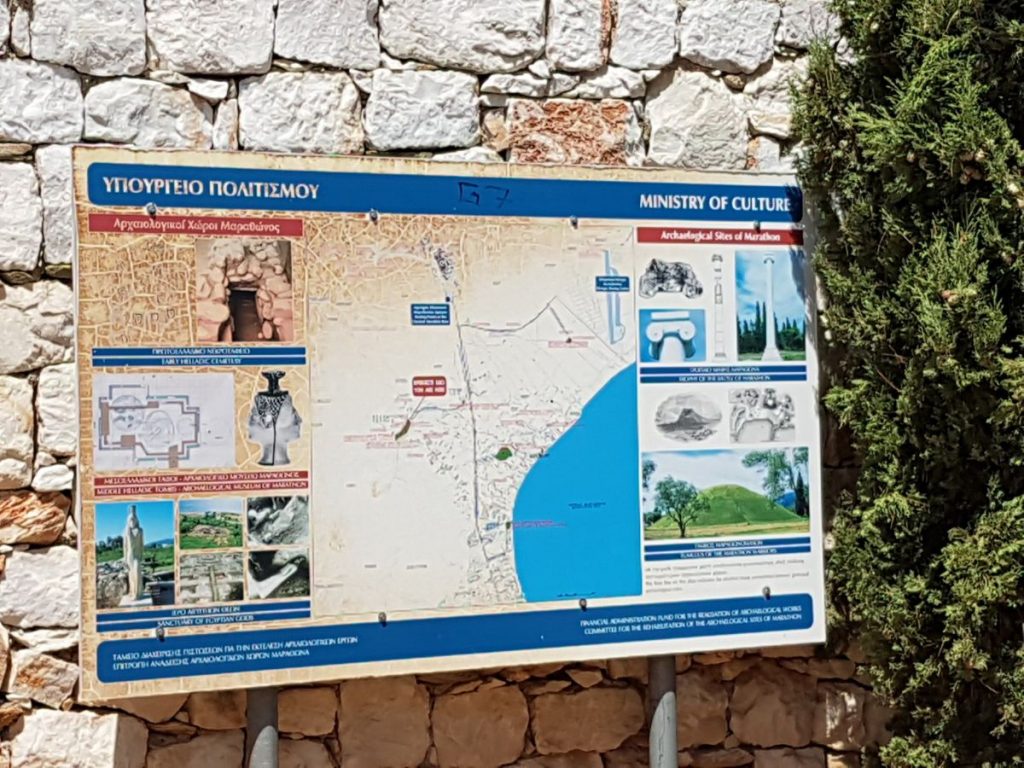
Trophy of Marathon
A reconstructed marble column at the northeast edge of the battlefield near the coast, marking where the Persians were routed. The original "trophy" was a pile of Persian arms and armour -- the column came later. Worth a quick stop if you're driving between the tumulus and Schinias.
Marathon Run Museum
A separate little museum dedicated to the history of the marathon race, from Pheidippides to the modern Olympics. If you're a runner, you'll enjoy it. If you're not, probably skip it.
Schinias Beach
Just 3 km from the battlefield, and one of the best beaches near Athens. Long, pine-backed sand facing the sea where the Persian fleet once anchored (slightly different vibe these days). The Olympic rowing centre from the 2004 Games is here too.
Some sections are organised with sunbeds and tavernas, others are completely wild. I usually head for one of the quieter stretches towards the south end.
Dave's Note: Don't leave Marathon without going to Schinias. The battlefield takes 1-2 hours tops. Drive the 3 km to the beach, have a swim and lunch at one of the tavernas, and you've got yourself a proper day trip instead of being back in Athens by noon.
Suggested Itineraries
History + Beach (My Recommendation)
- 09:00 -- Leave Athens
- 10:00 -- Museum and Tumulus
- 11:30 -- Drive to Schinias Beach
- 12:00-15:00 -- Beach, swim, lunch at a beach taverna
- 15:30 -- Return to Athens
History Focus Only
- 09:00 -- Leave Athens by car
- 10:00 -- Marathon Archaeological Museum
- 11:00 -- Walk to the Tumulus, explore the battlefield
- 12:00 -- Trophy of Marathon
- 12:30 -- Lunch in Marathon town
- 14:00 -- Return to Athens
Runner's Pilgrimage
- Morning -- Museum, Tumulus, Marathon Run Museum
- Afternoon -- Run or walk part of the original Athens marathon route (sections are signposted)
Practical Information
- Distance from Athens: 42 km (yes, that's where the marathon race distance comes from)
- Drive time: 45 minutes to 1 hour
- Museum entrance: 5 EUR / 3 EUR reduced
- Tumulus site: 5 EUR / 3 EUR reduced
- Museum hours: 08:30-15:30, closed Tuesdays
Dave's Note: Manage your expectations. Marathon is NOT a visually dramatic archaeological site. There are no standing temples or impressive ruins. The power is entirely in the history and the landscape. Read up on the battle before you go -- even a quick Wikipedia summary makes a HUGE difference. Standing on that plain knowing the story is a completely different experience to just looking at a grassy mound.
Best Time to Visit
Spring and autumn are best for comfortable walking and a green landscape.
Summer works great if you're combining with Schinias Beach -- visit the battlefield early morning before it gets hot, then head to the beach.
November is the Athens Marathon month. The race starts near the tomb of Miltiades and finishes at the Panathenaic Stadium in Athens. If you're a runner, it's a bucket-list event.
Also read: Best time to visit Greece
Nearby Alternatives
- Schinias Beach -- 3 km away. The obvious combo.
- Ramnous -- Ancient fortress and Temple of Nemesis, 15 km north. Remote, atmospheric, rarely visited. One for the serious history nerds.
- Brauron (Vravrona) -- Temple of Artemis, 20 km south. Could be combined for an eastern Attica archaeology day, but that's ambitious.
FAQ
Is Marathon worth visiting? If you're interested in ancient history, absolutely. If you need photogenic ruins and columns, skip it. The power is in standing where it happened, not in what there is to look at.
Can I visit Marathon without a car? You can get there by KTEL bus from Victoria, but getting between the sites once you're there is awkward. A car makes the day much smoother.
How long do I need at Marathon? The battlefield and museum take 1-2 hours. Add Schinias Beach and lunch for a full day.
Is it good for kids? If they're into ancient battles and history, they'll love the story. The mound itself is just a mound though, so it helps if they've read about it first. Schinias Beach is great for kids.
Can I combine Marathon with other day trips? Schinias is the natural add-on. Ramnous and Brauron are possible but make for a long day.
Dave is a UK travel writer living in Athens since 2015. With 20 years of firsthand travel experience and over 80,000 km of bicycle touring across six continents, he's been blogging at Dave's Travel Pages since 2005. Every guide is based on places he's actually been.
Get inside tips written by a local expert — island hopping itineraries, ferry know-how and hidden corners of Greece, straight to your inbox.
Subscribe to the newsletter