National Archaeological Museum Athens 2026

The National Archaeological Museum of Athens is the largest archaeological museum in Greece, and one of the best in the world. If you're planning to go to the NAM in Athens, these tips will help you make the most of your time.
Key takeaways
- Greece's largest museum; extensive collection spanning ancient Greek civilizations
- Plan minimum 3-4 hours for comprehensive visit; highlights do-able in 2 hours
- Key sections: Prehistoric, Bronze Age, Classical Greek, Roman period exhibits
- Metro Line 2 (Omonia station); central location; near historic center Athens
- Combine with nearby museums or archaeological sites for full cultural day
On this page
- About the Archaeological Museum in Athens
- How to get to the Athens National Archaeological Museum
- National Archaeological Museum Athens Layout
- Mycenae Gold and The Mask of Agamemnon
- The Bronze Statue Collection
- Artemision Bronze - Zeus or Poseidon?
- The Horse and Jockey Statue
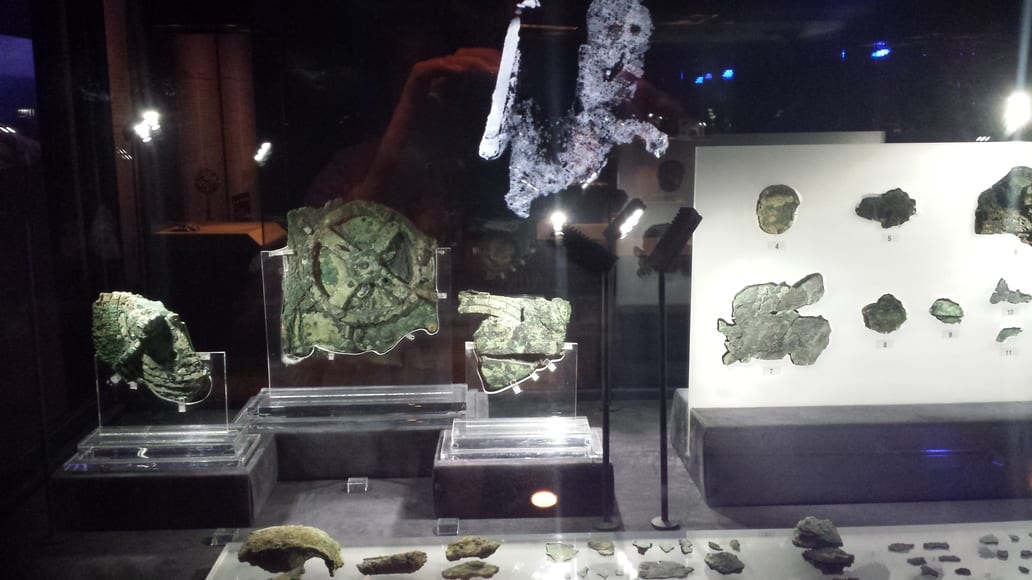
- The Antikythera Mechanism
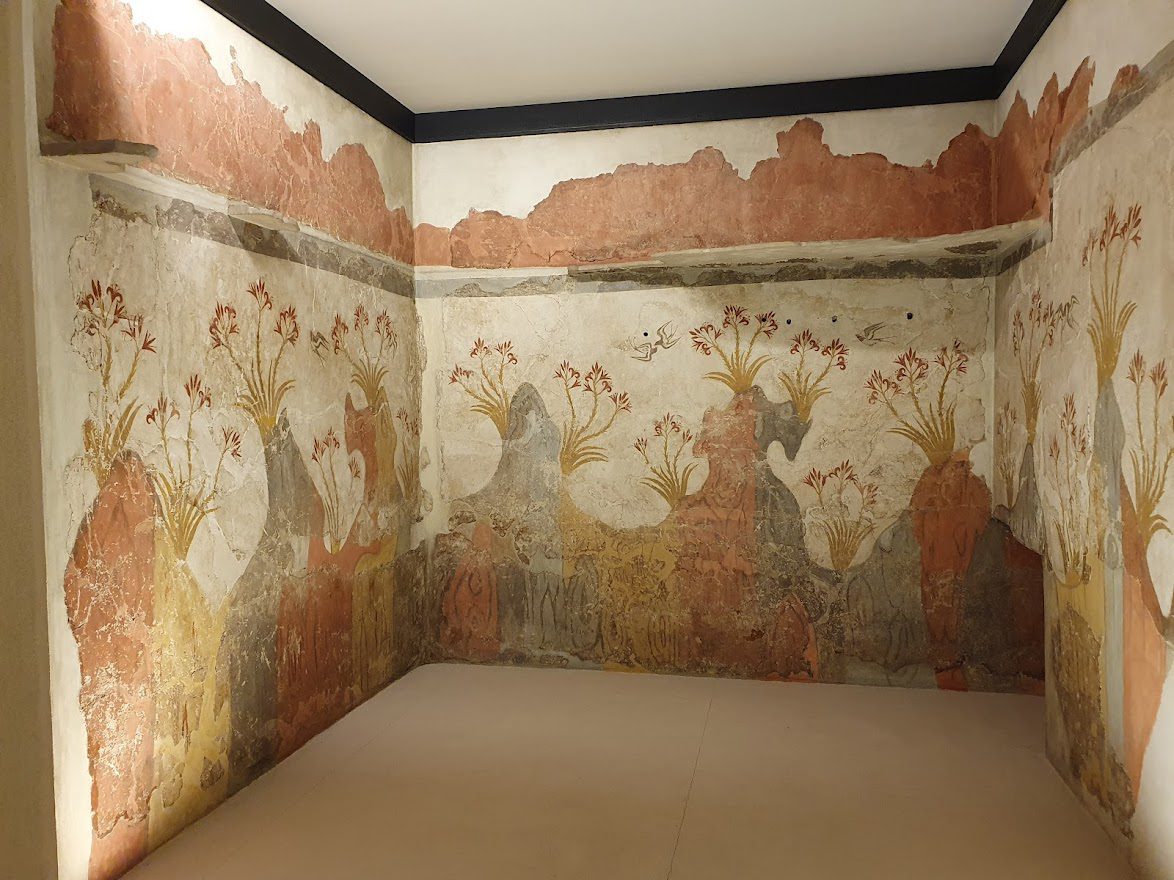
- Akrotiri Wall Engravings
- Useful Information
- Greece National Archaeological Museum FAQ
About the Archaeological Museum in Athens
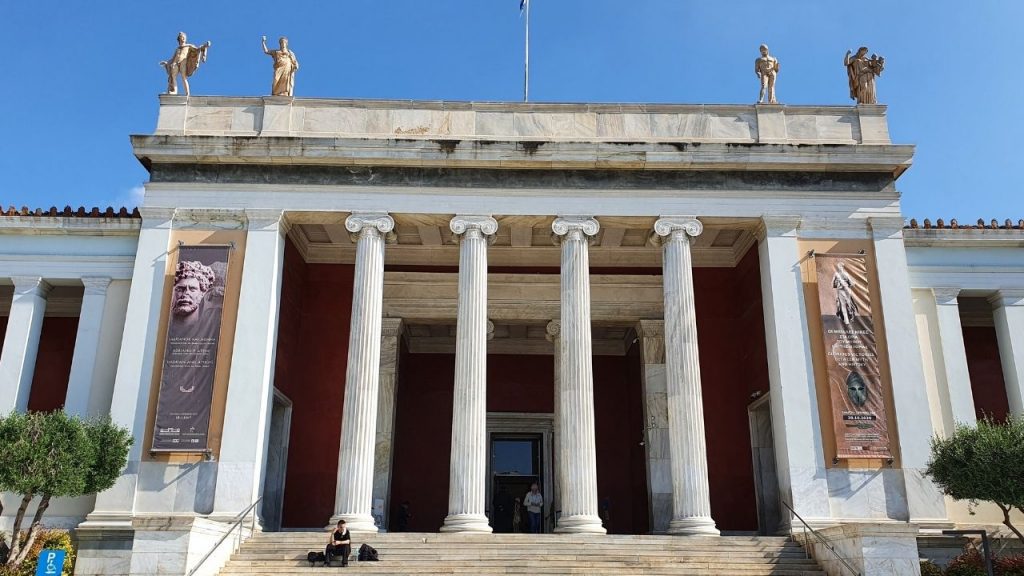
The National Archaeological Museum (or NAM as I may refer to it in this guide), houses one of the most significant archaeological collections in the world.
There are over 11,000 exhibits that showcase human development and civilization from the Neolithic era to late Antiquity.
These artifacts are mainly collected from different areas and ancient sites in Greece, although there are some sections from other parts of the world such as the Egyptian antiquities collection.
Even the museum itself has an interesting history. For example, it was first established in 1829, and moved to Athens in 1889. The current building is an incredible example of neo-classical architecture, and during the second world war, the objects were buried beneath the floors for safe keeping and to stop looting by occupying forces!
Today, the National Archaeological Museum is a must visit for anyone with an interest in archaeology and Greek history.
How to get to the Athens National Archaeological Museum
Although the NAM is located in central Athens, it isn't quite in the historic center. You might find that it is easier to use the metro to get there.
The closest metro station is "Victoria" which is on the green line (line 1). It's about a 10-minute from the metro station to the museum entrance.
Essential Info: National Archaeological Museum
- Tickets: €20 full, €10 reduced
- Opening hours: Apr 1–30: 08:30–15:30 (Tue 13:00–20:00); May 1–Oct 31: 08:00–20:00 (Tue 13:00–20:00); Nov 1–Mar 31: 08:30–15:30 (Tue 13:00–20:00). Last admission: 30 minutes before closing time
- Closed: 1 Jan, 25 Mar, 1 May, Easter Sunday, 25–26 Dec
- Free entry: 6 Mar, 18 Apr, 18 May, last weekend of Sep, 28 Oct, and 1st & 3rd Sundays Nov–Mar
- Book online: official tickets at tickets.hh.gr (tickets are also sold at the gate)
Facts checked against the official Hellenic Heritage (hh.gr) data, August 2026.
Entry requirements may have changed — check the official website namuseum.gr for current policies.
Check for current updates on their official website: NAM
National Archaeological Museum Athens Layout
The National Archaeological Museum is spread out for the most part on the ground floor, with a smaller section one floor higher. It brilliantly displays the style, culture, and sophistication of Ancient Greece in its well presented and labelled exhibits.
The rooms are laid out into different sections or themes as listed below.
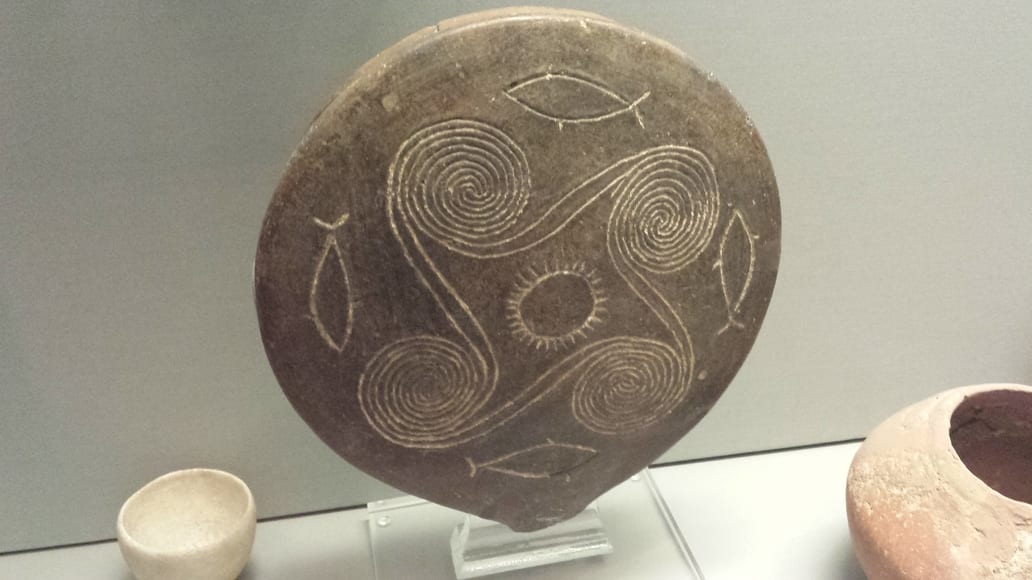
- The Prehistoric Collection (Neolithic, Cycladic, Mycenaean).
- The Sculpture Collection.
- The Collection of Vases and the Minor Arts.
- Terracotta Figurines.
- Vlastos-Serpieris Collection.
- Gold Jewellery and Silver Vessels.
- Glass Vessels.
- The Bronze Collection.
- The Egyptian Collection.
- The Stathatos Collection.
- Collection of Cypriot Antiquities.
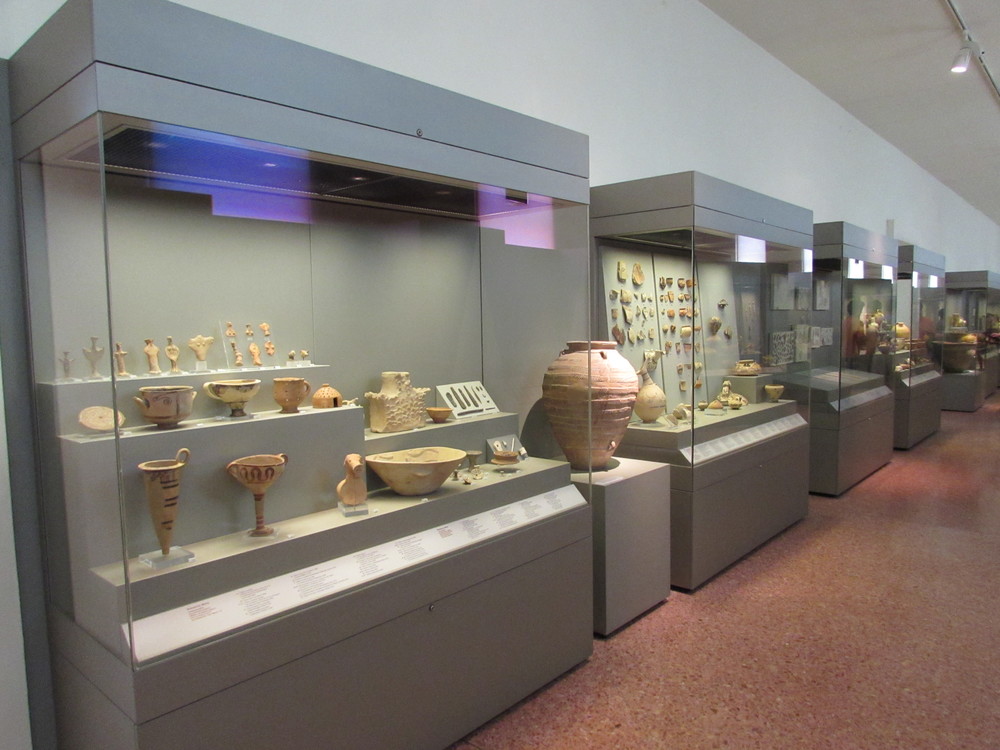
Does that seem like a lot? It is!
This is a huge museum, and so don't underestimate the time needed to do it justice.
In my opinion, you should allow for at least four hours. Fortunately, you can take a break whenever you want in the unique inner garden cafe area.
It also goes without saying, that there is no way that I can write about everything in the National Archaeological Museum of Athens. It would take a volume of books at least! Instead, I will mention some of the highlights you shouldn't miss while there.
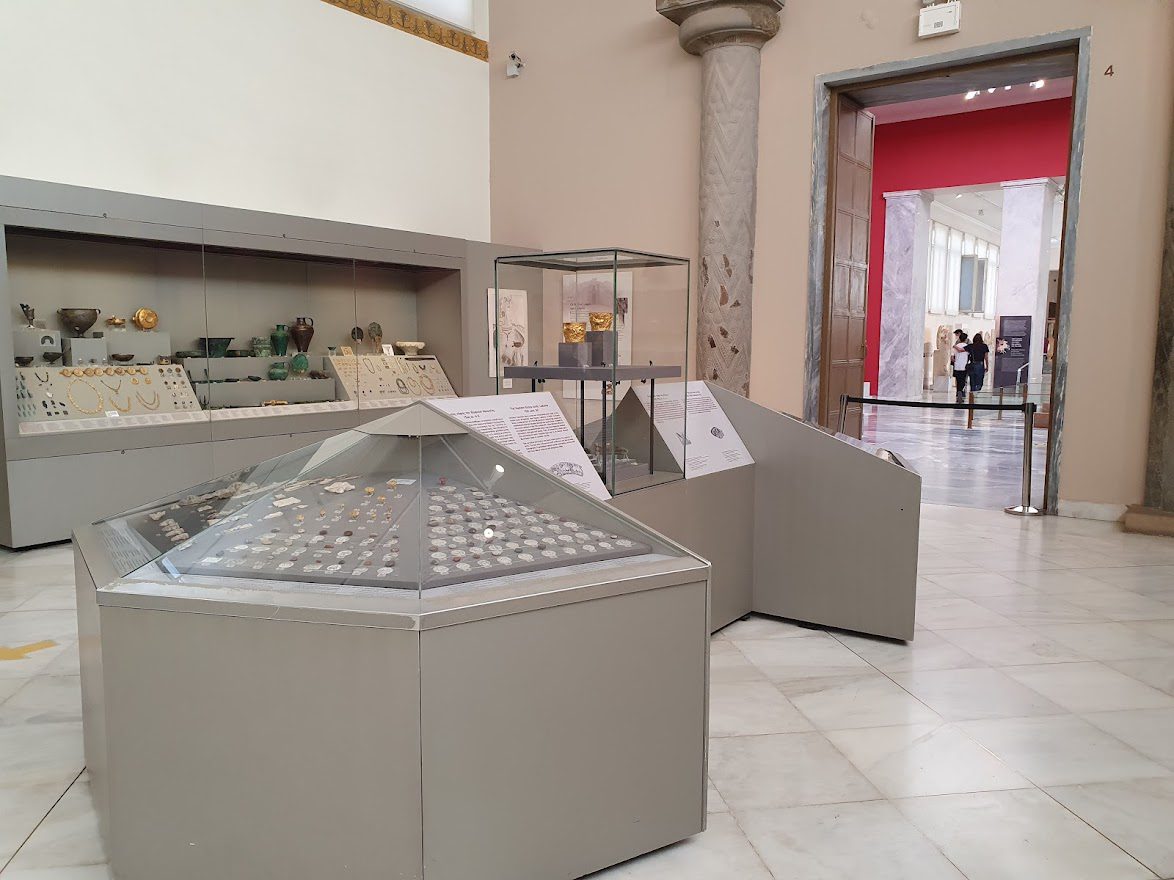
Mycenae Gold and The Mask of Agamemnon
I am a firm believer that whilst ancient civilizations may not have been more technologically advanced, their levels of craftsmanship were much higher than they are today.
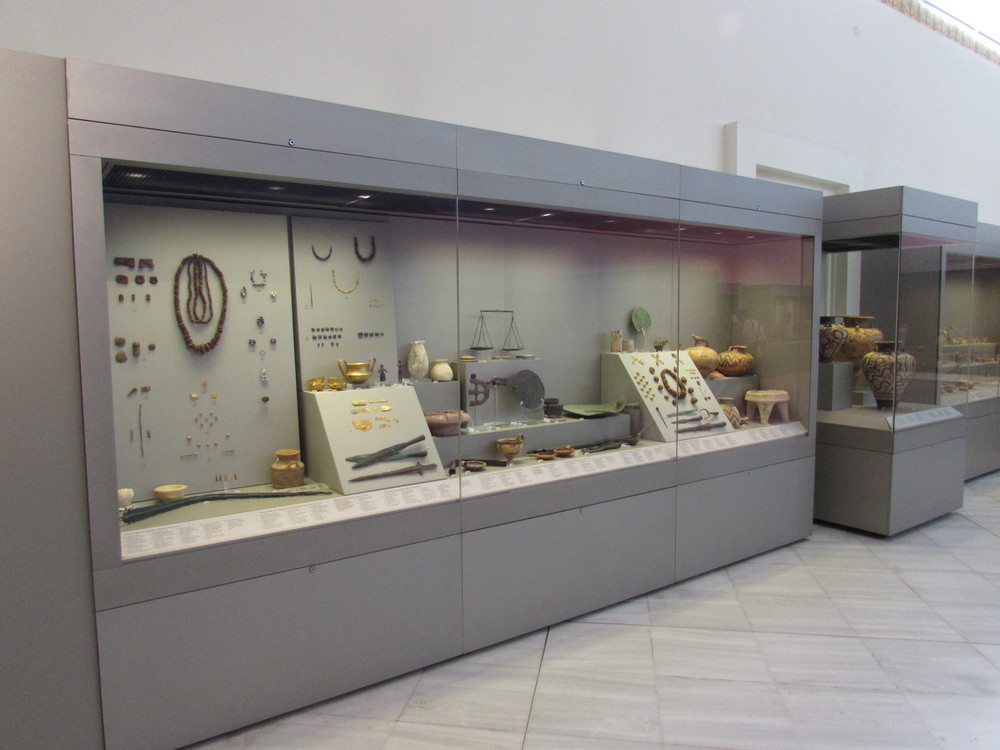
To me, the prehistoric collection shows this off beautifully, especially with the incredible grave goods found in Mycenae.
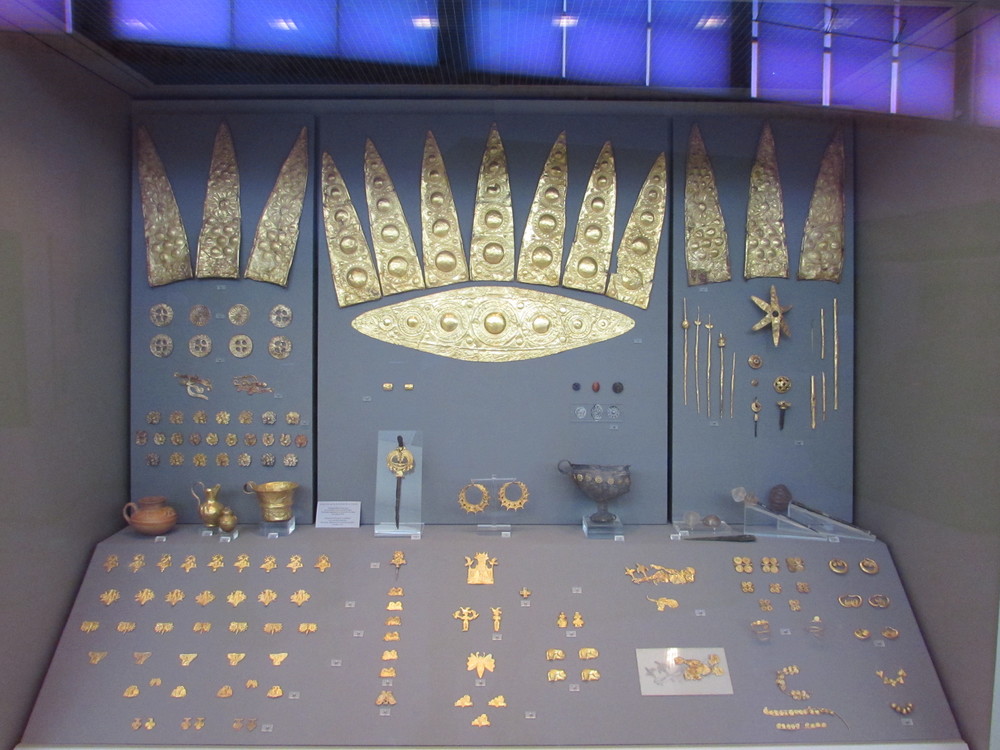
Having visited the ancient site of Mycenae only a few weeks before, it felt like a journey had been completed.
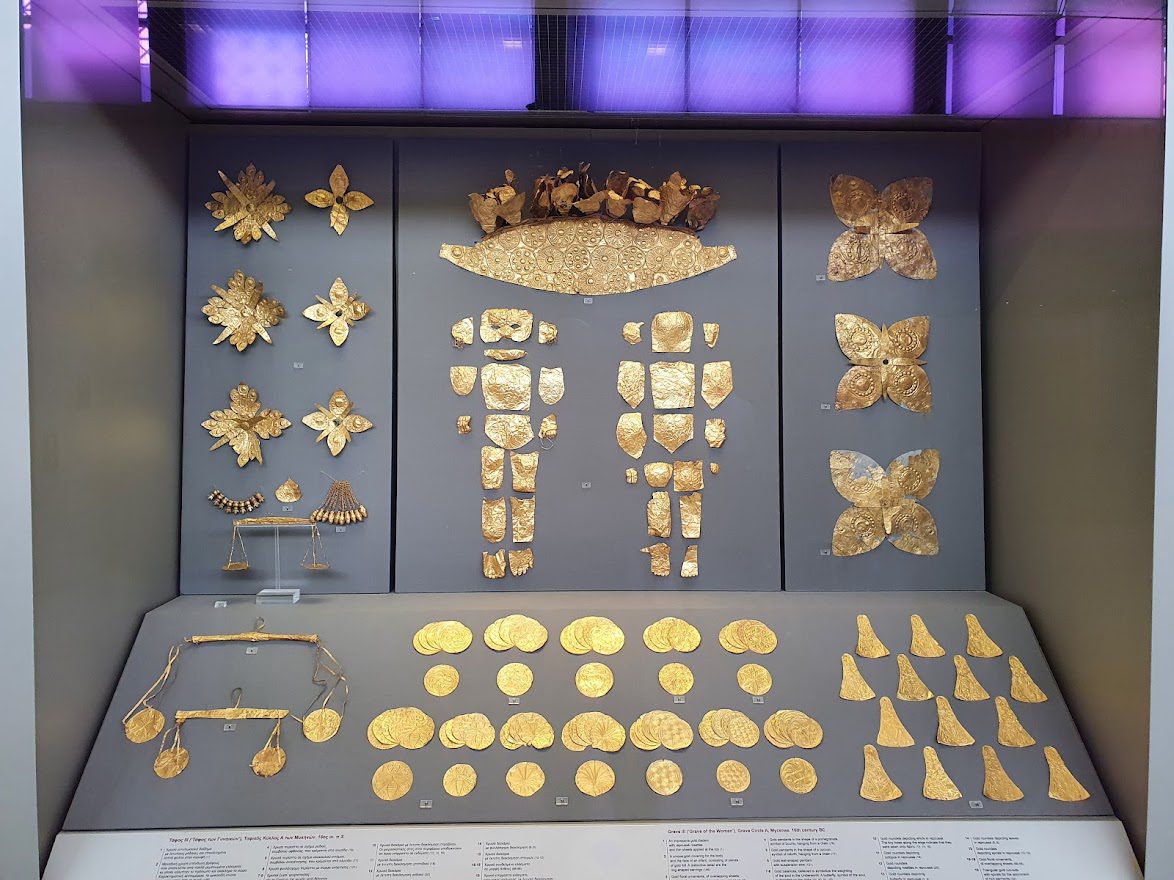
To think that this treasure had laid buried and undisturbed for thousands of years is amazing.
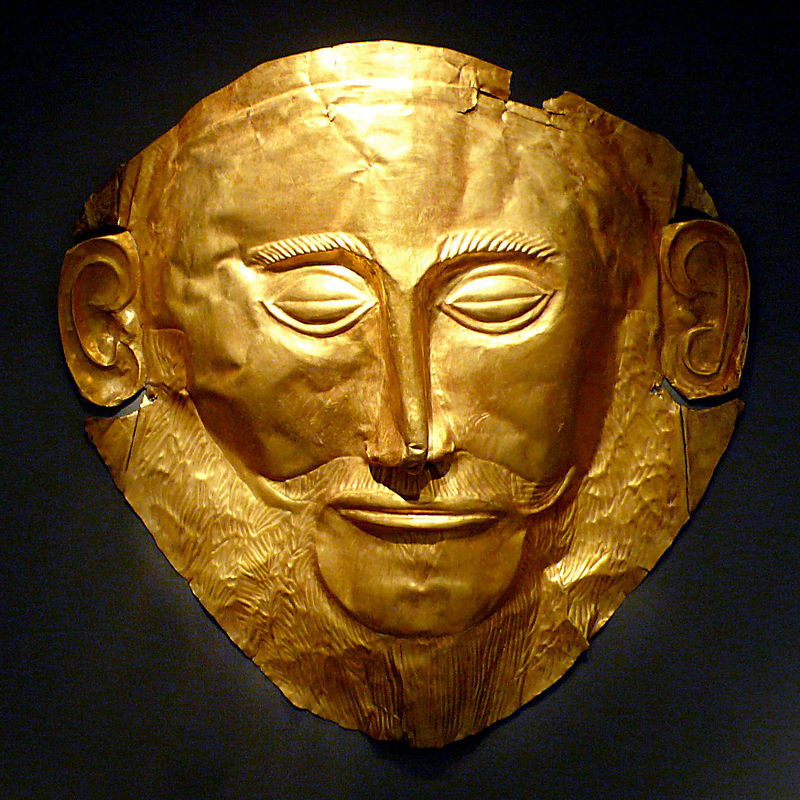
Was this indeed the death mask of Agamemnon? We will never know for sure, but it seems fitting enough!
The Bronze Statue Collection
The other section of the National Archaeological Museum of Athens which I loved, was the Bronze collection. This, more than anything else, reveals just how talented those early metal workers and artists really were.
Two of the most important bronze statues displayed here were found in the same shipwreck off the coast of Evia. These are the statue of Zeus/Poseidon (the jury is out as to who it is!), and the bronze statue of the Horse and Jockey.
Artemision Bronze - Zeus or Poseidon?
The Artemision Bronze is a 2,000-year-old Greek artwork that was recovered from the sea off Cape Artemision, in northern Euboea. According to most academics, the bronze depicts Zeus, but some have suggested that it might represent Poseidon.
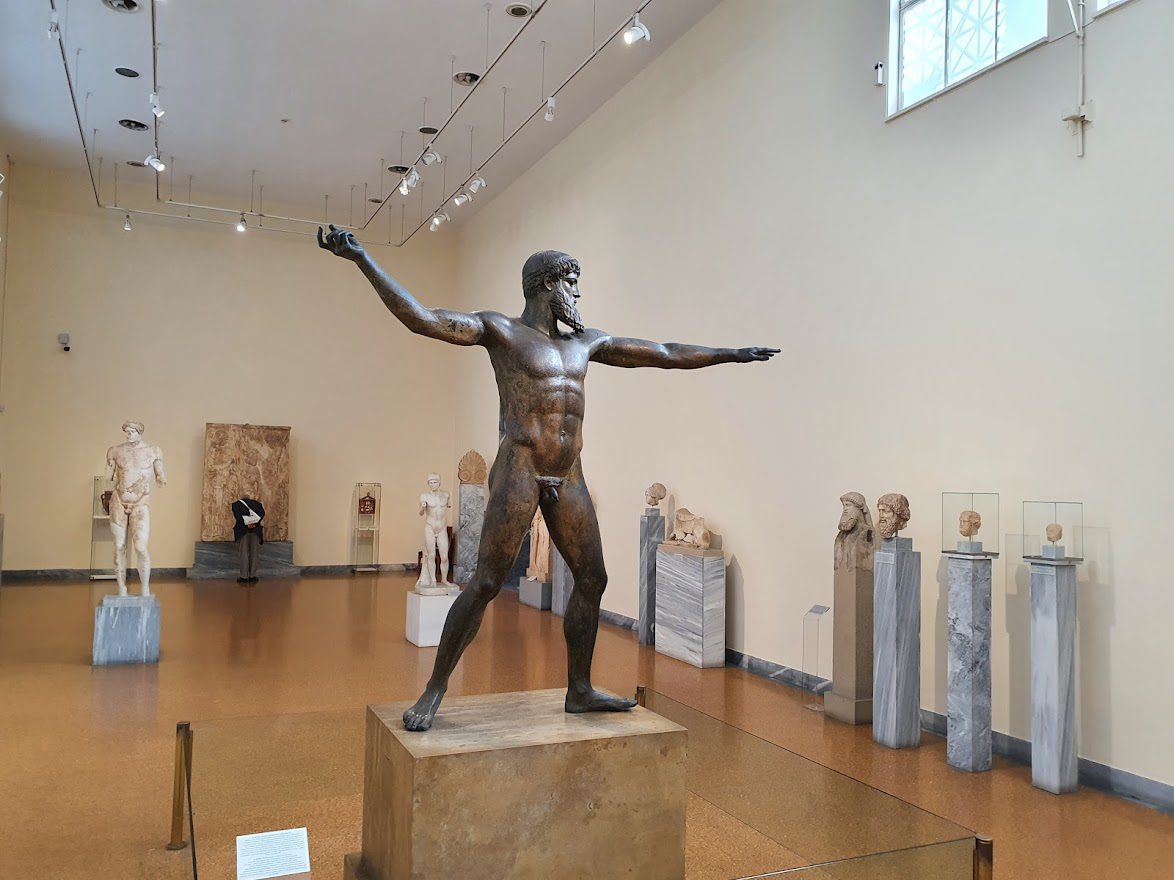
My opinion is that it is Zeus, due to the angle of the right hand. It is assumed originally a thunderbolt (or trident if you're in the Poseidon camp!) made of a different material such as wood would have been held here.
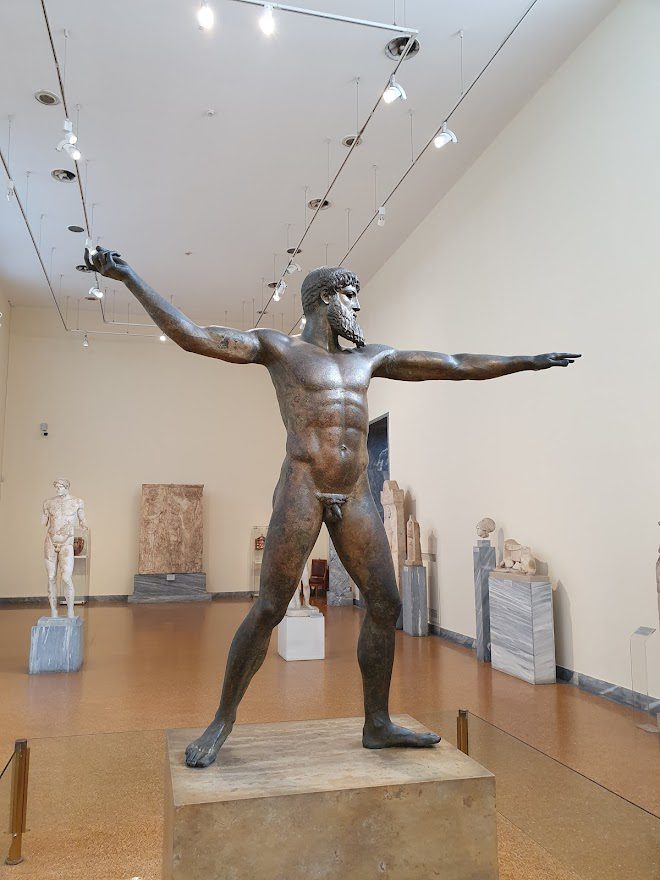
What do you think?
The Horse and Jockey Statue
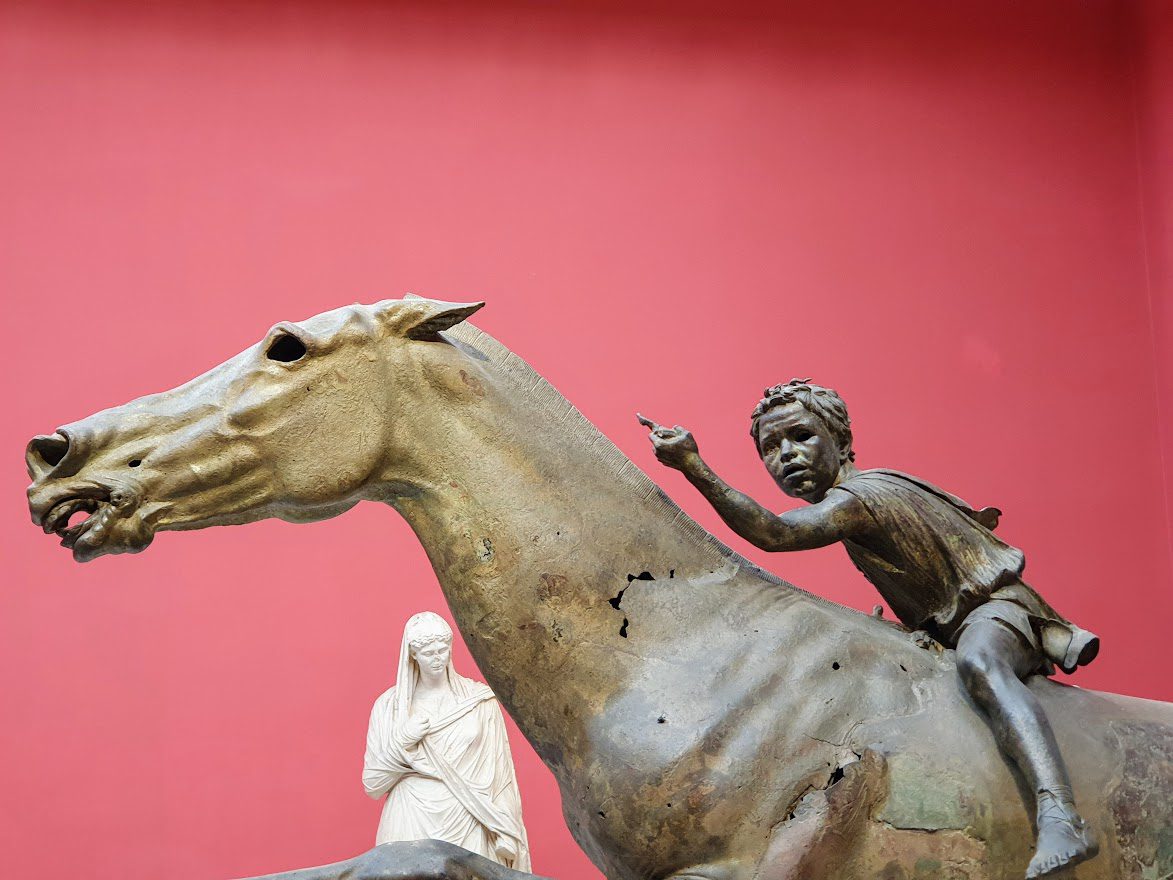
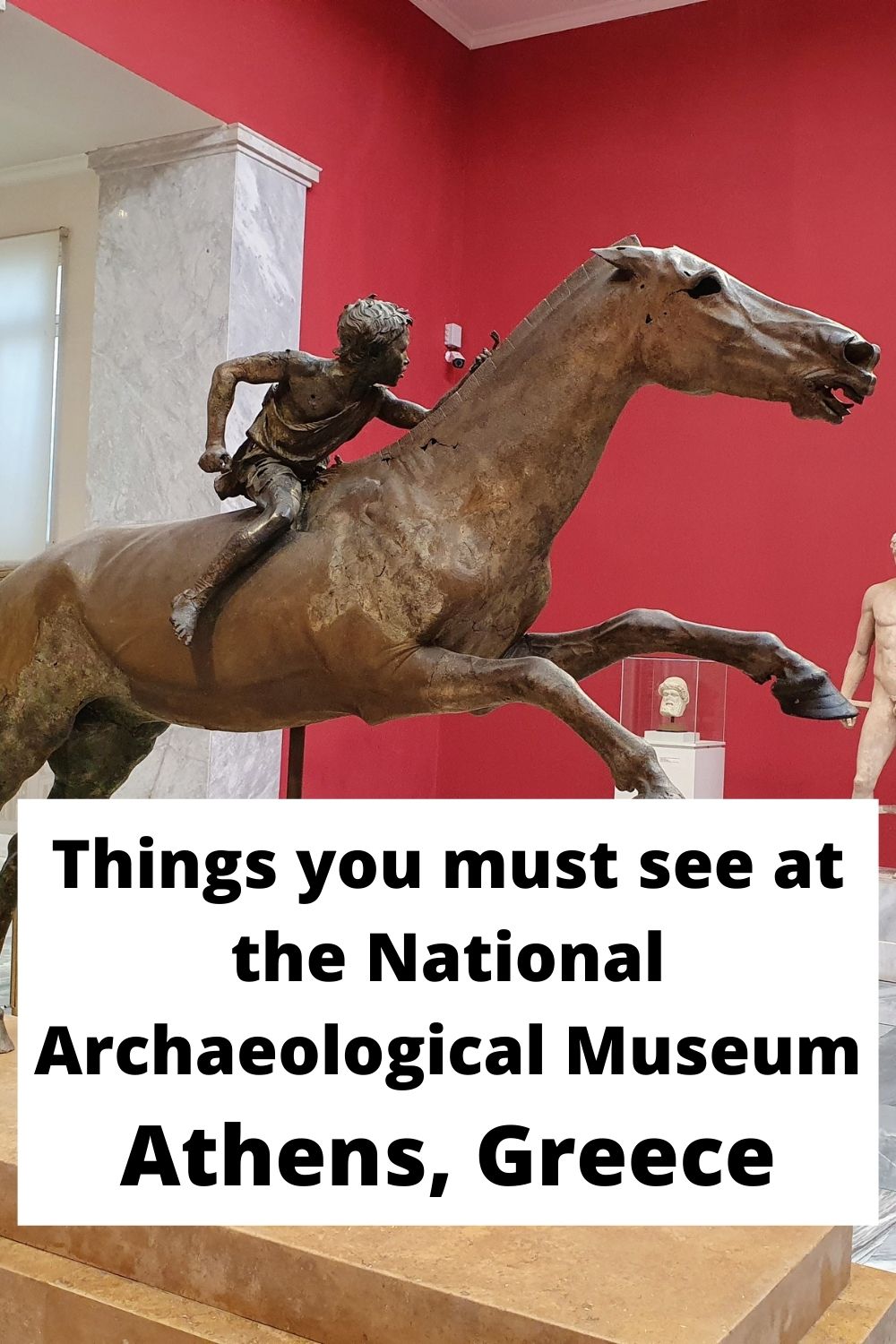
This is something of a center piece of the Greece National Archaeological Museum. Take a look at the features of both horse and rider. Aren't they incredible?
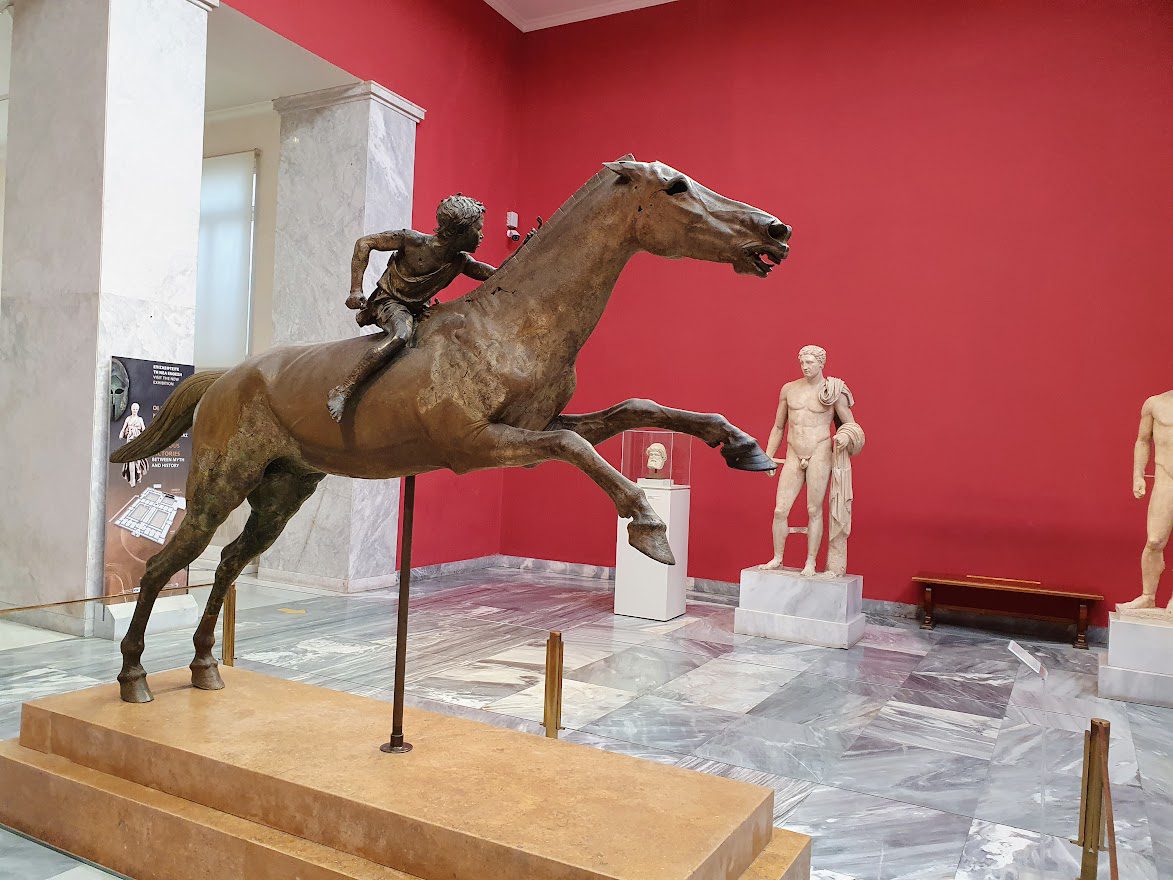
When you visit, look carefully at the right thigh where there is an engraved image of the goddess Nike holding a wreath in raised hands.
The Antikythera Mechanism
For me though, my absolute favourite part of the National Archaeological Museum of Athens, was the separate room displaying The Antikythera Mechanism.
Remember when I said just a few sentences back, that ancient civilizations were not more technologically advanced?
Well, this certainly makes you think again!
It is now thought that this was the world's first analogue computer, and measured the movements of the moon. This type of technology and knowledge was lost for nearly 2000 years!
I have written a special blog post just for that here >> The Antikythera Mechanism.
Akrotiri Wall Engravings
It seems no matter how many times you visit a place, you always end up discovering something new.
During a recent visit, I noticed an area which had some simply amazing wall engravings from Akrotiri on the Greek island of Santorini!
I'd never seen anything like these before - just goes to show you learn something new everyday!
Useful Information
Some final information then. I visited the National Archaeological Museum of Athens as part of my ongoing project to visit every museum in Athens.
Hours vary by season: Nov-Mar Wed-Mon 08:30-15:30, Tue 13:00-20:00; Apr-Oct Wed-Mon 08:00-20:00, Tue 13:00-20:00. The entrance to the museum is on Patission Street. The closest metro stations are Viktoria and Omonoia.
Related: Is Athens Safe?
Pro-Tips
The National Archaeological Museum of Athens is a great place to visit during the heat of the day, as the air-con is amazing! Sensitive types who get cold easily might want to bring a long sleeve top. Personally, I loved it!
A combined ticket used to be available covering the National Archaeological Museum of Athens, Byzantine & Christian Museum, Numismatic Museum Athens and Epigraphical Museum, but it appears to have been discontinued in the 2025 ticketing changes — ask at the ticket desk if it is still offered before buying separate tickets.
Greece National Archaeological Museum FAQ
Readers planning to visit some of the museums in Athens often have questions such as:
Is the National Archaeological Museum Athens Open?
From November until the end of April, the museum's opening hours are - Tuesday: 13:00 – 20:00, Wednesday-Monday: 08:30 – 15:30. From May until October 31st, the opening hours are - Tuesday: 13:00 – 20:00, Wednesday-Monday: 08:00 – 20:00.
Where is the National Archaeological Museum of Athens?
The address of the archaeological museum Athens is: 44, 28th of October (Patission) str. Athens, 106 82. The closest metro station is either Victoria or Omonia.
How big is the National Archaeological Museum Athens?
The NAM in Athens is housed in a neo-classical building and the exhibition space is 8000 square metres. There are five permanent collections with some additional temporary ones laid out over several different levels.
What is in the National Archeological Museum?
The National Archaeological Museum in Athens contains some of Greece's most significant relics from across time, ranging from prehistory through late antiquity. It is one of the world's greatest museums, with the greatest number of ancient Greek artifacts on display in one place.
Which is better Acropolis Museum vs National Archaeological Museum?
The Acropolis Museum is focused on the discoveries made on the Acropolis, whereas the National Archaeological Museum is Greece's main museum and houses artifacts from all over the country. The Acropolis Museum has a distinctive architectural style, but the NAM contains a wider range of relics from all historic eras.
You might also be interested in these other posts about Athens in Greece:
Dave is a UK travel writer living in Athens since 2015. With 20 years of firsthand travel experience and over 80,000 km of bicycle touring across six continents, he's been blogging at Dave's Travel Pages since 2005. Every guide is based on places he's actually been.
Get inside tips written by a local expert — island hopping itineraries, ferry know-how and hidden corners of Greece, straight to your inbox.
Subscribe to the newsletter
Do you recommend the museum of Greek Folk Art? Do have any advice regarding visiting it? I've found your suggestions for a two day itinerary for Athens very useful, thanks.
The Greek Folk Art Museum (if we are talking about the same one!), has two different buildings currently open which are Bath House of the Winds and Museum at 22 Panos Street. Either or both are nice to visit - but in my opinion not essential if you are running low on time. If you could only do one out of the two, the Museum at 22 Panos Street would be my choice.